The Bitcoin price remains a mystery for many investors.
Bitcoin fell 15% since January. Macro or geopolitics?
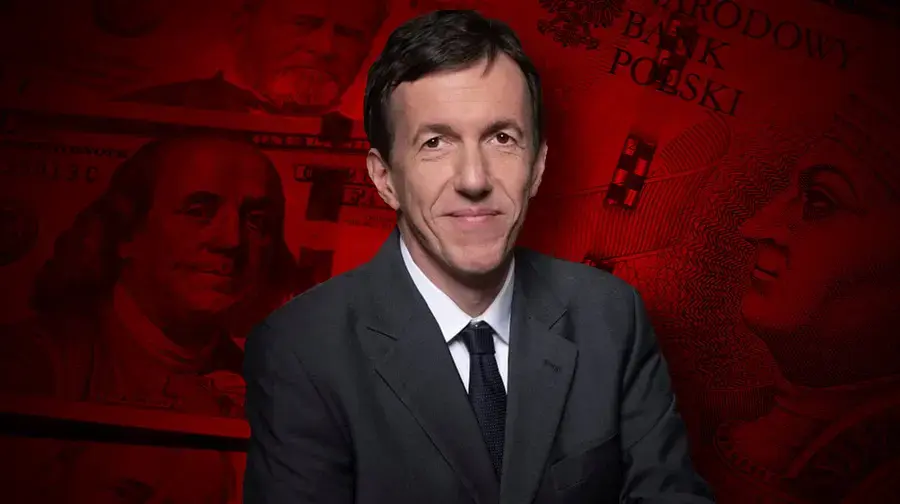
Christopher Kock, CEO of Virtune, in an interview with FXMAG highlighted key market factors affecting the cryptocurrency’s pricing.
"In the short term it is clear that the main factors influencing the BTC/USD rate are macroeconomic and geopolitical factors," he said.
For example, positive US CPI data from last week strengthened expectations of a more dovish stance by the Federal Reserve, initially boosting Bitcoin’s value.
The situation quickly reversed due to heightened geopolitical tensions after the failure of negotiations between the United States and Iran, showing how sensitive the market is to global risk sentiment.
"In a broader view we believe that today’s crypto market is increasingly driven by macroeconomic conditions and institutional flows, rather than just cyclical patterns. Although the traditional four‑year cycle still exists, its influence appears to be diminishing as institutional adoption accelerates," he added.
The expert emphasized that Morgan Stanley recently introduced Bitcoin ETF exposure to its network of 16,000 advisors representing over 6 bn USD of client assets.
"Such changes fundamentally alter market dynamics," he said.
See also: Bitcoin price heading for a 25 k USD crash? Expert: "Bitcoin could dive even near 45 k USD." What about ETH?
Ethereum – what next?
"We view recent Ethereum results in the context of two main structural trends: tokenization and stablecoins," Christopher Kock said.
Large financial institutions such as BlackRock are actively working on fund tokenization, while platforms like Nasdaq and Robinhood explore the possibility of tokenized shares with near‑instant settlement and 24/7 trading.
At the same time, regulatory changes in the United States, such as the GENIUS Act, favor the development of stablecoins.
The U.S. Treasury estimates that the stablecoin market could grow from about 320 bn USD today to 2 bn USD by 2028.
"Ethereum is currently the leading blockchain in both tokenization and stablecoins, with about a 50% market share in these segments. This positions Ethereum not just as a cryptocurrency but as a fundamental infrastructure for next‑generation financial markets", the expert said.
"From this perspective, investing in Ethereum can be seen as gaining exposure to the development of tokenization and digital dollar infrastructure," he added.
See also: Bitcoin price before a spike or crash? Expert: "The cryptocurrency started reacting unusually." Here’s how ETH/USD is doing.
BTC and ETH – price comparison and expert forecast
Today, investors pay 74,352 USD for one Bitcoin on exchanges, a weekly price jump of 8%.
The Virtune CEO said the company expects further consolidation over time.
Capital will increasingly concentrate in a smaller number of high‑quality, liquid assets.
We believe many blockchains will play an important role as cryptocurrency integration with the traditional financial system deepens. Different networks will likely serve different use cases, especially in areas such as payments, smart contracts and financial infrastructure.
"We assert that the fundamental drivers remain very strong and are not fully reflected in current price levels. Institutional adoption, regulatory clarity and real use cases are rapidly evolving," he added.
The expert cited a Bernstein Research forecast of 150 k USD by year‑end, which, according to Kock, reflects growing institutional demand and structural market changes.
Chart. Bitcoin price (BTC/USD)

Source: Trading Economics
Ether, on the other hand, costs today 2,360 USD, translating to a 12% increase over 7 days.
Chart. Ethereum price (ETH/USD)

Source: Trading Economics
See also: Bitcoin price fell 50% from ATH. Expert warns. "The real gamechanger" will change BTC/USD direction?