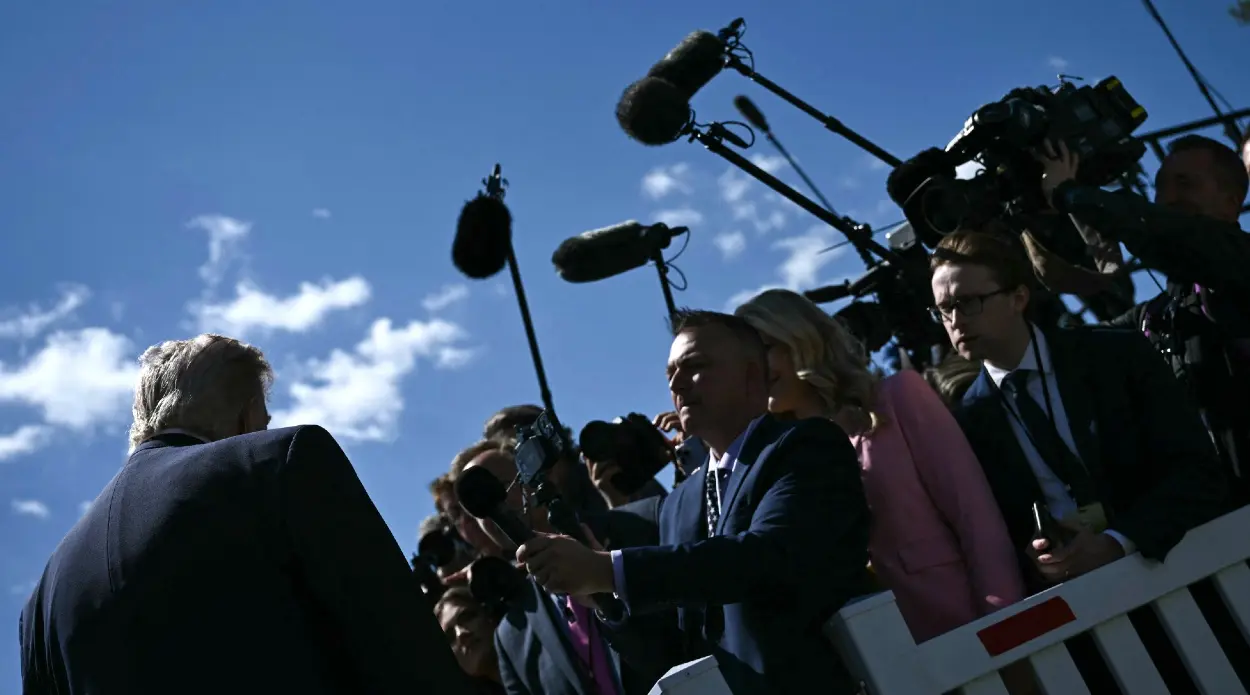
The text included a short fragment about negotiations (“discussions”) and an assessment of the current regime as “less radical and far more reasonable.”
There were also no references to the unsatisfactory stance of the European part of NATO from the U.S. perspective. Relatively many references appeared to the Strait of Hormuz. Trump suggested that when the military operation ends, the strait will “naturally open.” That last statement could, however, raise heightened anxiety among countries involved in trading commodities from the Gulf region. The lack of “automation” of this process would mean an extension of oil supply problems and its products.
A part of Trump’s remarks sounded more confrontational than in recent days. At the end of the address the U.S. president stated that “we will bring them back to the age of the stone age, where they belong.” A similar statement regarding Iran was posted by P. Hegseth (U.S. Secretary of War) on social media.
No reference was made to the earlier ultimatum (April 6), i.e., the deadline by which Iran was supposed to open the Strait of Hormuz and agree to U.S. conditions for ending the war. It is therefore difficult to assess whether the deadline for the demands was extended, or the ultimatum ceased to apply and the baseline scenario is military escalation.
The market reaction to the speech was negative. Brent oil rose by about 5‑7% to 105‑107 USD/b. Diesel contracts (our broader fuel market analysis in the latest quarterly issue here, p. 7) appreciated by more than 10% and are testing 200 USD/b in the morning (peak of the current crisis). On the U.S. Fed, the yield curve moved up by 5 bp, and the S&P 500 plunged by more than 1%. Entering the European part of Thursday’s session is therefore in a mood of heightened risk aversion, which will be difficult to change in the coming hours.
National PMI without emotion
According to surveys conducted by S&P Global, the March industrial PMI came in slightly higher than expected (48.7 points, previous 47.1 points). The index improvement is mainly a result of higher production and a slower decline in orders. The next month, however, employment in industry fell.
Moreover, as expected, March saw a rise in price pressure in the sector due to fuel price increases – the cost‑of‑production index approached 65 points (chart on the right here). There was also a rise in the finished goods price index. A positive surprise was the continued optimism about the outlook for the next 12 months.
In our view, the March PMI was not a breakthrough. A slightly better reading than in February may be the result of accelerated order fulfillment before potential supply problems arising from the Middle‑East conflict. Optimistically, the higher level of business optimism for the next 12 months can be seen as a sign of a quick return to the baseline scenario after the Gulf war ends.
Americans pleasantly surprise
Yesterday we saw a series of readings from across the ocean. The first was ADP, which indicated an increase of 62 k jobs in the private sector (consensus 40 k). A relatively good reading also had a promising structure – almost half of the jobs were created in construction. This is the second solid result from this industry, which may indicate, among other things, the ramp‑up of investment processes by AI. In addition, the wage dynamics for people changing employers rose slightly.

Above market expectations also came the retail sales dynamics (0.6% mo/mo vs 0.4% mo/mo) for February. Finally, there was a rebound in the automotive market, which had been dragging down (+1.2% mo/mo vs -0.7% mo/mo). Other discretionary spending also performed solidly – clothing, recreational goods and drugstore purchases (from +1.3% mo/mo to +2.3% mo/mo). Retail sales (about 40% of the consumption basket) look good for the February PCE, although the positive correlation between measures has decreased in recent months. We assess, however, that in a period of heightened uncertainty the U.S. consumer entered with momentum and gives hope for maintaining U.S. economic momentum in the coming months.

The least positive surprise came in March ISM. The aggregate was in line with expectations (52.7 points). The lower new orders reading was compensated by higher production. Employment remained unchanged versus February. The price component rose quite clearly – from 70.5 points in February (high metal prices) to 78.3 points – the highest since mid‑2022. Respondents’ managers split into two camps – the optimistic one pointing to a positive Supreme Court ruling on tariffs and the pessimistic one complaining about the negative consequences of the Gulf war. In view of the above, we view the industrial ISM neutrally, but the overall mid‑month readings support our expectations of a relatively good Q2 on the Atlantic side.

Re‑emergence of the base FI
At yesterday’s opening of the European session, the 10Y UST yield recorded daily lows (4.26%). Later the mid‑curve Treasury yield gradually rose. It was somewhat supported by better‑than‑expected U.S. data, but overall volatility remained subdued until the close of mid‑day trading.
Ultimately, on the main nodes the U.S. curve moved up by 2, 3, and 3 bp to 3.81% (2Y), 4.33% (10Y), and 4.91% (30Y). In daily terms, German debt ended the session flat, but its trajectory was negative – partly due to impulses from across the ocean and the lack of continuation of the oil price discount. Ultimately, on the main nodes the change in Bund yields was -1, 0, and 0 bp to 2.60% (2Y), 2.99% (10Y), and 3.46% (30Y).
The weakening of UST during the Asian session combined with rises in energy commodity prices puts pressure on the start of Bund trading. Pre‑holiday trading also potentially increases the risk that during quiet days the market will fear conflict escalation (uncertainty about the ultimatum – details in the first paragraph).
Strong session on bonds in the region
CEE securities clearly appreciated during mid‑day trading. On the 10‑year tenor, Czech debt yield fell by 6 bp (4.84%), and Hungarian by 29 bp (6.96%). On the domestic market we also observed an increase in risk appetite – the ASW spread on 10Y fell by 2 bp to 99 bp.
Ultimately, on the main nodes the SPW curve fell by 14, 17, and 17 bp to 4.25% (2Y), 5.06% (5Y), and 5.69% (10Y). External impulses are negative in the morning. This will be aided by the rise in SPW yields. Its scale will, however, depend on the opening of the U.S. session – both for commodities and debt.
Currency rollercoaster
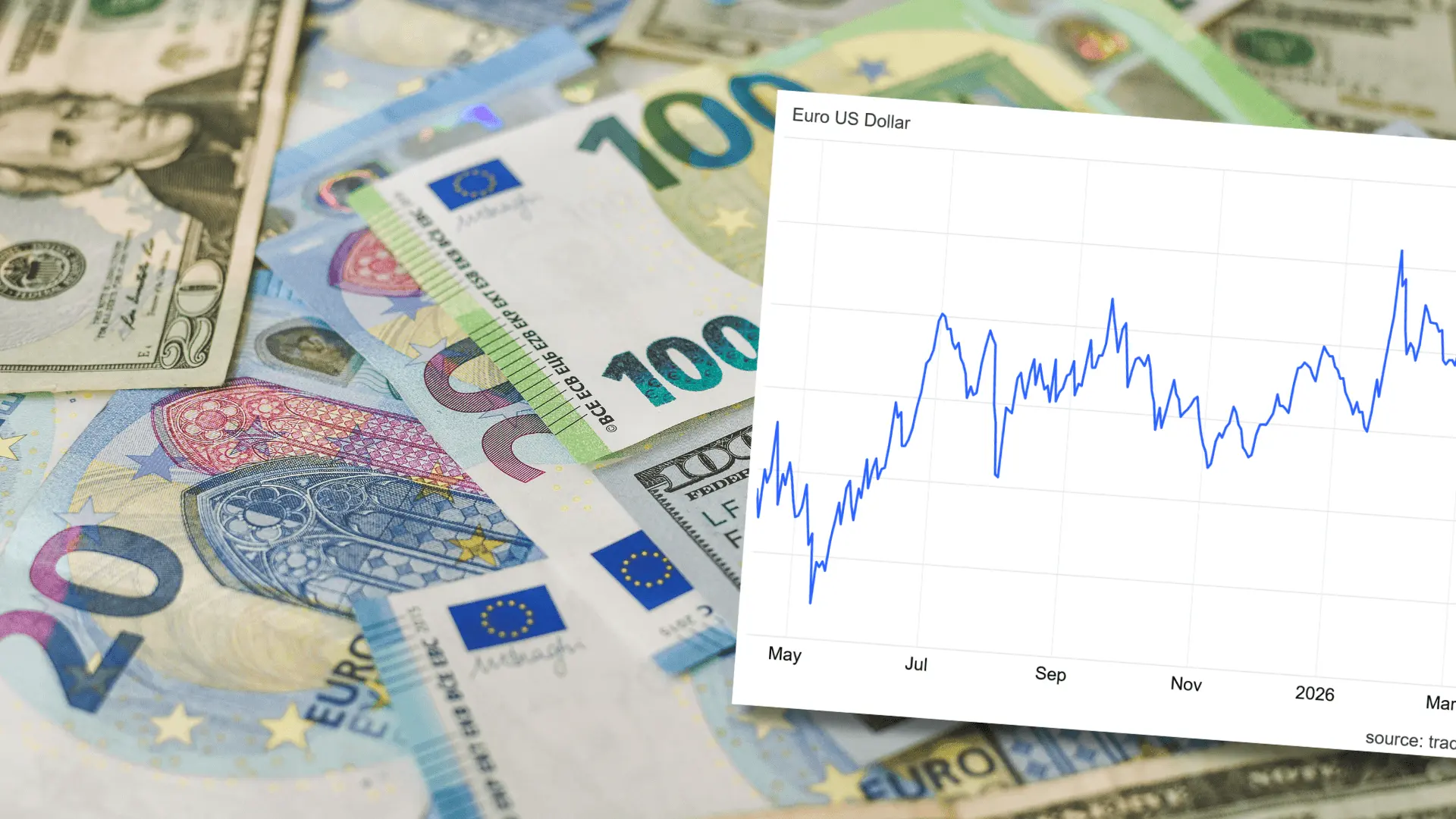
Until the end of yesterday’s FX base trading, there was a heightened risk appetite. EURUSD appreciated by 0.4%, although the close was clearly below daily highs. The situation changed after the release of D. Trump’s speech (details in the first paragraph).
From about 1.1600, the pair dipped by 50‑80 bp, and the beginning of European quotes is shaping up at 1.1520‑1.1530. We assess, as with SPW, that the key moment of today’s session will be the start of U.S. quotes. Americans effectively had no opportunity to respond to Trump’s message, and the reaction to the president’s speech was carried out by “Asian desks.” It will also be important whether the White House administration starts addressing the echo of yesterday’s speech in the morning, especially that concerns about the holiday period may rise sharply.
Gold insensitive to external impulses
The sudden rise in risk appetite did not lead to a stronger domestic currency. As we noted earlier, the current change in market sentiment is mainly realized through interest‑rate‑linked instruments. As a result, EURPLN quotes are stable almost independently of external conditions. We expect this regime to persist in the coming hours and trading on the pair in the 4.27‑4.30 range.