How China Profited from the War
Let’s start with the benefits that are most tangible at the moment, namely commercial ones. How does China make money from a war it is not fighting? It is the result of its energetic pragmatism. China has been preparing for a potential energy crisis that could be triggered by a drastic halt of supplies caused, for example, by the blockade of the Strait of Hormuz, which we are currently facing. The Chinese have done this in two ways. First, they increasingly rely on renewable energy sources, mainly photovoltaics, but also wind turbines, hydroelectricity and nuclear reactors. The share of all these sources in their energy mix has clearly increased over the last 15 years. In addition, China has meticulously taken care of reserves of other energy resources such as oil and gas, buying them in larger quantities when market prices were favorable.
When an energy crisis hit Europe, it was not as painful as it was for Asian countries. Here, for the time being, it manifests itself as a “mere” clear rise in prices. In Southeast Asia, especially the region where Poles have been flying to on vacation in recent years, the problem is much bigger. The Philippines have already declared an extraordinary energy state, stating that the current oil reserves will last only 45 days. In many other countries in the region, governments are urging people to save gas, gasoline and electricity. Airlines in the region are seriously considering cutting flight numbers to ration aviation fuel. Those governments need immediate additional energy sources now and alternatives for the future to avoid similar situations later. And as it turns out, in both cases China comes out on top with a helping hand. But of course not for free.
According to Reuters, Chinese companies are reselling record amounts of LNG, taking advantage of the sharp rise in spot market prices. According to data from various analytical firms such as Vortexa or ICIS, China overloaded 8 to 10 LNG shipments in March. China can afford this because domestic resources and pipeline imports from Russia comfortably meet domestic demand. Already in the first quarter, huge amounts of gas were resold to needy countries in the region. Data show more than 1.3 million tonnes of gas, which were redirected to Thailand, India, the Philippines, South Korea and Japan for generous sums. For comparison, in the entire last year China did not resell even a million tonnes, and now this amount has significantly surpassed the quarterly figure. This shows how opportunistic they act in this situation.
And as Adam Farrar, senior geo‑economic specialist at Bloomberg and former adviser to Kamala Harris, rightly points out, China will soon also start earning from its energy policy in a different way. Countries in the region severely affected by the current crisis will probably start relying more on renewable energy sources, which in such situations allow partial independence from raw material supplies. As the expert emphasizes, in that part of the world the clear leader in producing parts for solar and wind energy is Chinese companies. It is therefore possible that their business will soon grow like yeast as a result of demand from other neighboring states.
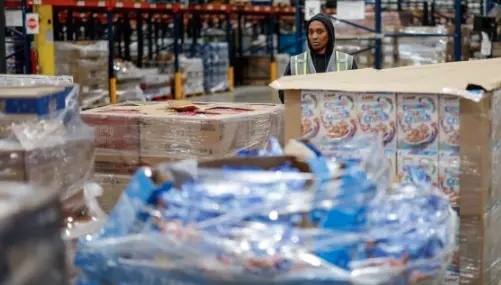
And not only on the energy front will Chinese trade thrive as a result of the ongoing conflict. Experts point out that due to energy problems in Thailand, Vietnam and other Southeast Asian countries, concerns are growing about the continuity of supply chains from that region. As a result, many importers are now turning to China, which appears better secured. In the Financial Times we read that exporters from industrial regions on China’s east coast report a growing number of orders from foreign customers. Capital Economics, even before the war, estimated that this year China’s export value would grow by about 5%. After several days of war, this value was revised to 6%.
What is also important on this front is China’s relative impartiality, which allows it to do business with both sides of the conflict. Moreover, China is making larger investments in Gulf countries that cooperate with the US, even though the public perception is that Iran is its bigger ally. Meanwhile, the estimated value of China’s total investments in Iran up to 2024 was less than 5 billion dollars, whereas in Saudi Arabia it was more than 15 billion dollars. Clearly more money was also invested in the United Arab Emirates. And it is possible that these amounts will only increase. The Economist writes that China already has its eyes on potential tenders that Gulf countries will announce when it comes time to rebuild infrastructure after the war.
China’s Military Advantage
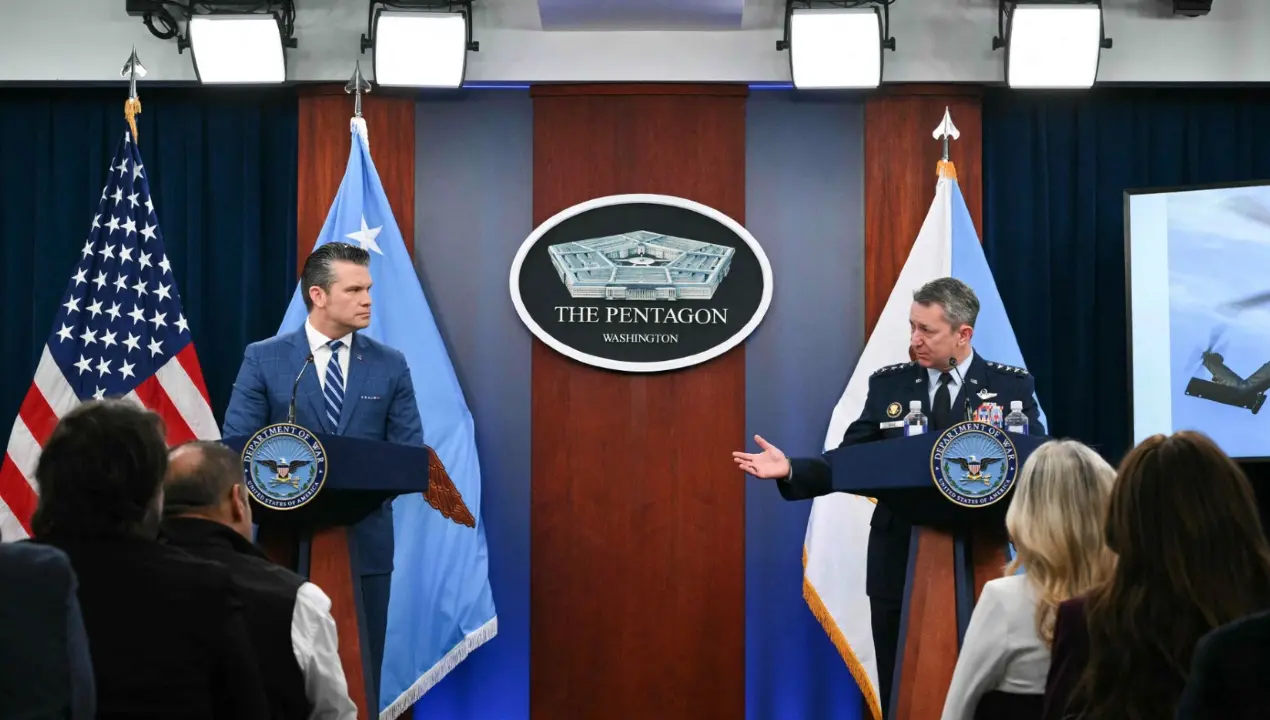
According to experts, the war in the Middle East may also give China a certain military advantage over the US. Why? Primarily because Americans are showing the world how to conduct a conflict in the style of the 2020s. The United States probably did not pull all its cards from the sleeve, but based on how they fight Iran, one can already draw conclusions about how their conflicts in the near future in other regions might look. And China should watch them very closely.
And according to the opinion of people with contacts in China quoted in The Economist, not everything that Chinese see is to their liking. They are especially surprised by how effectively and comprehensively the US army uses artificial intelligence to coordinate wartime actions and target identification. We can confidently assume that China will want to catch up with the US in this area in a short time, and because they can observe them in action, they have a chance to do so. Moreover, as Adam Farrar from Bloomberg notes, historically the Chinese have already had a habit of modeling their actions on those of the US army.
The expert explains that China’s military has drastically changed its approach after 1991, when the United States fought the war in Iraq. The new doctrine was to be modeled on the American one. At that time the world, with China at the forefront, was also supposed to be surprised by how efficiently the Americans used new technologies such as computers, GPS, satellites. Today, as we can see, they are pioneers in using artificial intelligence.
But to show this, they had to reveal some of their cards in part. Also those that had never been laid out before. For example, during the current conflict the Americans used ballistic missiles of the PrSM type for the first time in combat. And here another potential advantage of the State of China on the military front appears. They keep their aces very close to the heart. China has not waged a war on such a scale for more than 40 years. It is therefore difficult to predict exactly how they might act. The same applies to their equipment. Although there are some videos circulating on the internet showing technological novelties in the army, we know far less about its capabilities and strategies compared to the American one.
And the same can be said about their resources. Since the beginning of the war, as much as the Americans launch missiles and various types of projectiles, media, research institutes and think‑tanks have been watching. Several reports with meticulous calculations have already been published about how many missiles and what type exactly the United States has already fired at Iran. The Royal United Service Institute was even able to estimate when the resources of specific models might run out. According to the specialists’ calculations, the THAAD projectiles would run out on April 17, and the PrSM models on April 12. Meanwhile, the Patriot missile resources were expected to be depleted by about 20%. These are, of course, calculations from before the ceasefire. Thanks to it, the Americans managed to save a little ammunition. Information about China’s arsenal is more limited and selective, and estimates from research institutes are more general.
mature China and the “Nation Builder”
Important benefits for China’s war in the Middle East also come in the diplomatic sphere. The previously quoted Adam Farrar from Bloomberg notes that China usually does not take on the role of mediator in various conflicts, but here, next to Pakistan, it has taken on that role. On the last day of March, both countries issued a joint statement calling for an immediate ceasefire and the resumption of safe passage of ships through the Strait of Hormuz. They emphasized the importance of the United Nations and multilateral cooperation in building lasting peace. As the expert emphasizes, such behavior puts China in a completely new, favorable light.
He reminds that the United States, during Joe Biden’s administration, tried to impose a global narrative that China is the state that does not observe international norms. Meanwhile, now they cite the UN and guard the world order. As Farrar says, they are the only adult in the room, which gives them an image in the eyes of the world, and the United States loses. The Economist spoke with various Chinese diplomats and they repeated that China in this case follows the timeless maxim attributed to Napoleon: “Never interfere with an enemy when they are making a mistake.” Hence the lack of actual engagement in the conflict from either side, and only a display of diplomatic maturity aimed at improving China’s image in the eyes of the rest of the world. They are starting to appear as a stable, balanced and predictable partner, while the United States has been introducing mainly chaos, especially in global trade.
We are all used to this Western media space, but in Chinese media, both online and on television, the nickname for Donald Trump – “The Nation Builder” – has become popular, which can literally be translated as “Nation Builder” or a bit more nicely, “Architect of the Nation”. Sounds nice, right? Donald Trump would certainly smile if someone said that about him. The catch, however, is that in this nickname it is not the American nation but the Chinese one that is meant. Local commentators gave it this nickname because they believe that the US president’s actions are building the position of China, not the United States.
China can use this diplomatic lever, which has increased recently, during the May summit in Beijing, during which Donald Trump will meet Xi Jinping. According to the original assumptions, this summit should have already taken place. It was initially planned for the turn of March and April, but Donald Trump postponed his visit, citing the need to oversee wartime actions from Washington. The summit was therefore postponed to mid‑May. As experts note, how both sides approach it will depend on the outcome of the war in the Middle East.
Even before the ceasefire announcement, they claimed that if the United States would be clearly weakened as a result, both militarily, economically and diplomatically, Xi Jinping would want to take advantage of it. As The Economist writes, the Chinese president may push for agreements limiting US tariffs and export control and try to open the way for Chinese investments in the US. Moreover, if the United States were truly weak, Xi Jinping could even try to force Trump to support a peaceful unification of China with Taiwan! This, however, seems doubtful, because even if the United States could not objectively call the current solution to the conflict a defeat, it is hard to speak of a complete success. Although, of course, Donald Trump declared such a victory.
China’s Advantage on Taiwan
This is a good moment to focus on the island that is crucial for the relations of both sides. For years there have been concerns about a potential armed conflict between China and the US over Taiwan. In the public sphere, suggestions even appeared that, because the Americans have focused militarily on the Middle East, revealing themselves somewhat in the Indo‑Pacific region, China may soon try to take advantage of this by taking over Taiwan. According to official data and media reports, the United States moved several thousand soldiers, dozens of missile launchers and even an aircraft carrier from those regions. These sensational claims of a quick cunning attack are not confirmed by reports backed by American intelligence sources.
In mid‑March Reuters reported that according to information obtained by US intelligence, China does not plan any invasion of Taiwan at least until 2027. In fact, a military invasion of Taiwan is only one of many potential options for solving the island’s deadlock and is rather undesirable for both sides. In a recent interview for FXMAG, the eminent sinologist Professor Bogdan Góralczyk spoke on this topic. He mentioned that according to Xi Jinping’s plan, by the centenary of the People’s Republic of China, i.e. by 2049, China would like to bring the country to a renaissance, and one of the assumptions of this vision is the unification with Taiwan. The professor stresses, however, that China would prefer to achieve this peacefully. This aligns with expert reports about the upcoming summit in Beijing, during which Xi Jinping may try to suggest Trump support for such a solution.
But not everything must go perfectly. What could happen? For some time now, various think‑tanks are trying to predict. RAND, CSIS or the Atlantic Council have presented extensive reports on potential scenarios in recent years. Let’s take a closer look at them.
First, let’s consider the previously mentioned “classic” kinetic war. It is the darkest, but also the least likely scenario. It is considered an absolute last resort. China would only choose it when it is completely convinced that Taiwan will, in every respect except the purely geographic one, move away from them enough that it can no longer be attracted in any other way. Neither through diplomacy nor through more or less direct economic pressure. It is a solution with potentially very far‑reaching and possibly irreversible consequences.
In the event of a full kinetic conflict involving missiles, airstrikes, and ground forces, there could be not only huge human losses but also the destruction of infrastructure in Taiwan, which is key to almost the entire global tech sector. According to estimates, about 60% of global semiconductor demand is produced on the island, and if we focus only on the latest‑generation chips essential for AI development, the calculations already point to even 90%! The Atlantic Council predicts that if a direct clash over the island had already occurred, it would not be an easy conflict to resolve, and the whole mess would be significantly prolonged, causing drastic consequences for the entire global economy.
And here it is worth mentioning the experiment conducted by The Economist. Inspired by the recent blockade of the Strait of Hormuz and its huge impact on markets and the economy, it decided to test what would happen if other key trade chokepoints were blocked. The analysis shows that the potential war over Taiwan could have the most severe consequences for the entire world. As a result, the Strait of Taiwan would be closed for an indefinite period. In the Indo‑Pacific region there is also the extremely key Strait of Malacca, whose blockade is also not excluded if the war spreads across the entire region. In addition, the South China Sea and other Indonesian straits would be blocked.
According to The Economist, if their blockade occurred, the average length of trade routes would increase by 58% due to the search for alternative routes. And in the case of partial trade, finding alternative routes would be almost impossible, as shown in the chart below, after the black bars. Trade through the Strait of Hormuz, while impossible to redirect, is still a much smaller share of the whole, which is accounted for by the straits in the Indo‑Pacific region.

It is also possible that even this would not be the most drastic consequence of a full‑scale war over Taiwan. The Atlantic Council, in one of its reports, notes that this conflict raises the greatest concerns about the potential use of nuclear weapons! And as we know, there is no turning back from that point.
It is therefore no wonder that both powers, although they care about the island, would rather avoid this scenario. Therefore, how else could the problem be solved? Reports also mention solutions such as economic quarantine or a naval blockade. The former seems somewhat more likely because it involves less armed escalation. Both would involve limiting trade, so how exactly do they differ?
CSIS defines “quarantine” as an operation conducted by law‑enforcement services aimed at controlling movement in a specific area. It is therefore about using the coast guard, not the navy, to control trade established under the law. China would probably try to stop or redirect selected ships, especially those carrying critical raw materials and other sensitive cargo, while leaving some traffic intact to claim they are not at war. As we read in the think‑tank report Stimson, in practice, quarantines would likely be accompanied by cyber attacks, disinformation, electronic warfare and diplomatic pressure.
And how would a blockade look? Here a navy would be used. CSIS defines a blockade as a military campaign aimed at significantly limiting movement to Taiwan, not only maritime but also air. It would be almost completely cut off from the rest of the world. As a result, the consequences of the blockade, both economic and diplomatic, would be greater. As a result, the risk of escalation leading to a full‑scale war would also increase.
At the moment, Chinese are studying the Americans, checking how far they can react. Based on this, they may in the future determine which of these restrictions – blockade or quarantine – will be more effective. And China has already taken advantage of the confusion in the Middle East. Earlier, Professor Góralczyk quoted said that China activated aviation and partially the fleet to test both Taiwan and the Americans. The expert believes that from now on they can do this “continuously”.
Moreover, a few months ago, in December of last year, China went a few steps further in this direction. They conducted training maneuvers under the codename Justice Mission, which simulated the blockade of the island and the takeover of key locations. Both the navy and the air force and ground forces participated. It was meant as a warning to separatist forces and, as experts note, the maneuvers were carried out shortly after the United States announced one of the largest arms packages for Taiwan worth 11 billion dollars.
And not only in this way can China exert pressure in the region. The Wall Street Journal recently reported that China for the first time in a decade resumed the program of building artificial islands, mainly for military use in the South China Sea. According to the authors, the timing of the resumption of activities is not accidental. China deliberately uses the fact that the United States focuses on Iran, Venezuela and Cuba, so they accelerate the expansion right now.
Special attention is drawn to work around Antelope Reef. According to experts, a potentially largest naval base in the region could be built there, located in disputed waters. This is how the progress looks in satellite images. CSIS even attempted precise calculations, according to which China has already created almost 1,500 land acts in that area.

According to sources, China can create another runway there, more missile installations, additional reconnaissance infrastructure and a whole support base for the army enabling increased military forces in the region. Artificially deepened lagoons visible in the pictures could serve as a base for navy ships, including submarines, and even new Chinese aircraft carriers. In the Wall Street Journal text we read that greater control over this area is of key importance in the event of a conflict over Taiwan.