Forecasting food prices is a dicey business
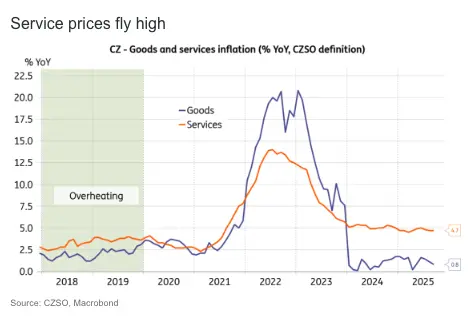
Czech annual inflation eased to 2.3% in September, coming in 0.3ppt below market and Czech National Bank expectations. The main drag was a pronounced decline in food prices. Given the limited breakdown of the preliminary estimate, we also see some potential for weaker regulated prices, mainly through lower energy components. Annual price growth in the service segment remained unchanged at 4.7% in September, while price dynamics in the goods segment eased to 0.8% in September from 1.1% previously. We estimate that core inflation likely softened marginally to some 2.7%, coming in 0.1ppt below the CNB's summer forecast.
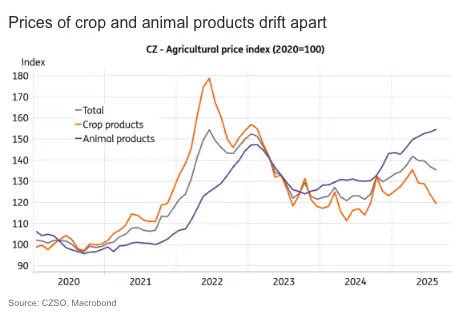
The thing is that food prices at this time of the year are heavily affected by the crop season, which can put downward pressure on price tags, especially when it comes to unprocessed foodstuffs such as vegetables and fruits. This was also the case in the latest CPI preliminary estimate, when the annual price dynamics for unprocessed food eased noticeably to 3.4% in September from 7.8% previously, declining 2.1% on a monthly basis. The agricultural producer’s data provides a decent indication of what is going on in the food sector, with crop product prices decreasing since May, while prices of animal production continued to gain over the same period. As a result, crop products added only 4.6% annually in August, while annual growth in prices of animal products crept up to 18.9% in the same month, a record pace observed since April 2023.

So, forecasting consumer price tags of foodstuffs is a challenging business. We consider the fluctuations in unprocessed food prices as the volatile part, which can change direction rather easily. Meanwhile, the more persistent component, which is set to shape future consumer prices in a more robust manner, continues to get punchier. Of course, a strong crop can trickle down to somewhat softer pricing of feedstock for farm animals, mitigating the effects in that segment. Still, in processed food production, the costs are more complex and exert a more lasting impact
Pricing in the service sector holds the fort
The softer headline inflation is positive news for rate-setters. Still, food is usually considered a volatile item that can change quickly, a view also held by the central bank. Meanwhile, pricing in services seems to continue on a strong footing, with the annual growth rate consistently hovering around the 5% mark. The longer this price growth remains at such an elevated level, the higher the probability it takes its toll on inflation expectations. Consider the recent robust nominal and real wage increases, and add to this the fact that households spend relatively less on goods - as these prices trend lower - and you come to a single conclusion: Houston, we have a problem. We don’t see the recent food price surprise as altering the CNB's hawkish stance for now, as more observation on softening inflation would be needed. Ergo, when it comes to the base rate outlook, we are on the same page as Neil Armstrong: The Eagle has landed.